The Origin of Rum – Or How the Story of Rum Began
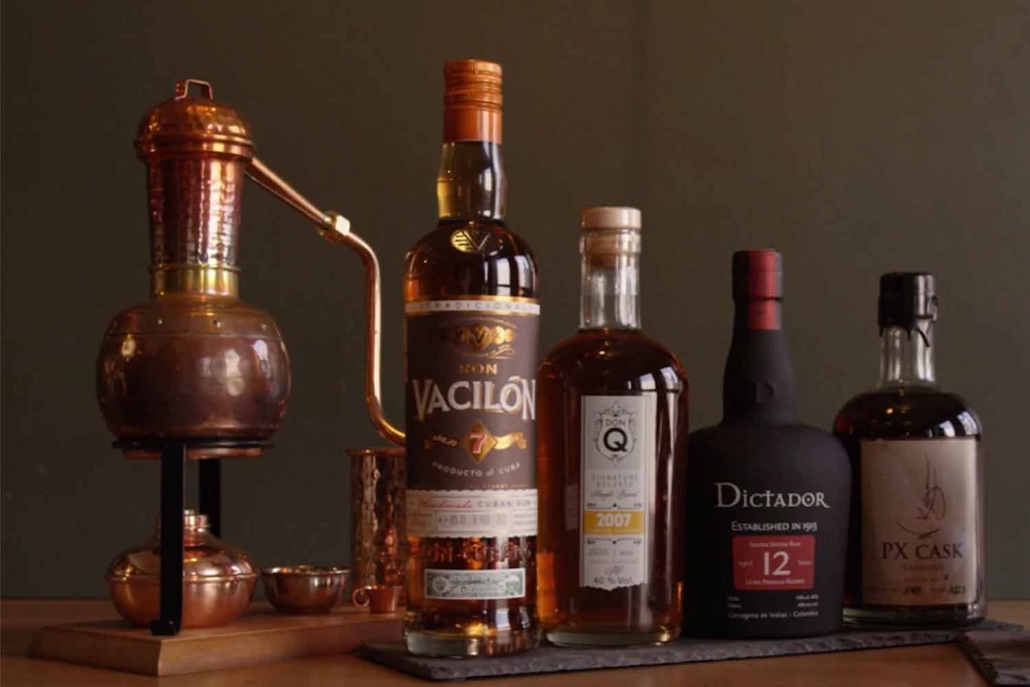
During raw sugar production, an unavoidable byproduct is created that cannot be used further: molasses. It still contains 50 percent of the plant's original sugar content and has the pleasing property of fermenting when combined with yeast and water. This process produces a lightly alcoholic sugar wine – mosto. This was already distributed to the slave labourers on the plantations in the 16th century. It wasn't long before the colonial masters came up with the idea of increasing the alcohol content of the mosto through distillation. The bulky and poorly distilled spirits, like the mosto, continued to be issued to the slaves.
Rum, the Royal Navy and pirates are a big part of rum's history.
The Royal Navy began paying part of sailors' wages in rum from 1655. Eventually, rum served as payment throughout the entire navy. Daily rum rations were issued to the sailors. This tradition continued until 1970. Pirates also quickly recognised the value of the sugarcane spirit and stocked up on rum in abundance. Many people think of figures such as Sir Francis Drake or Sir Henry Morgan (more commonly known as Captain Morgan).
Rum everywhere in the Caribbean, South and Central America
From the 17th century, rum was already being produced on many Caribbean islands and on the mainland of Central and South America. The spirits were strong and martial in nature at that time. Nevertheless, elaborately produced and aged rums managed to find their first fans in the Old World. This led, among other things, to King Philip V of Spain completely prohibiting the production and export of rum from his colony of Mexico in 1700.
The light Cuban style
Around 1860, the continuous distillation method also reached the Caribbean. Facundo Bacardi in Cuba managed to create an unusually light rum style with the help of this new process. With this new style, he revolutionised the industry and made rum accessible to an even wider audience. The Cuban, or rather Spanish (often used in regions that were previously Spanish colonies) style quickly won the hearts of connoisseurs worldwide.
Regional Styles
Fortunately, many rum producers stuck to their tried and tested methods despite Facundo Bacardi's innovations, producing their heavy, characterful rums as they had for decades. This was particularly true in Jamaica, Barbados, and Guyana. These regions define the English style: long-fermented spirits, often distilled in pot stills. Rum producers in the French overseas departments also remained true to their traditions, continuing to make their Rhum Agricole from fresh sugarcane juice. This has defined the French rum style since around 1800.